Anderson Mosaics

Reclaimed aluminum / hand-built portraits

The process is part of the surface.

Each piece begins as ordinary aluminum and becomes a field of small decisions: cut, flattened, fired, engraved, sorted, bent, and assembled until the image begins to hold light from more than one direction.

01

Collect, clean, and open the metal.

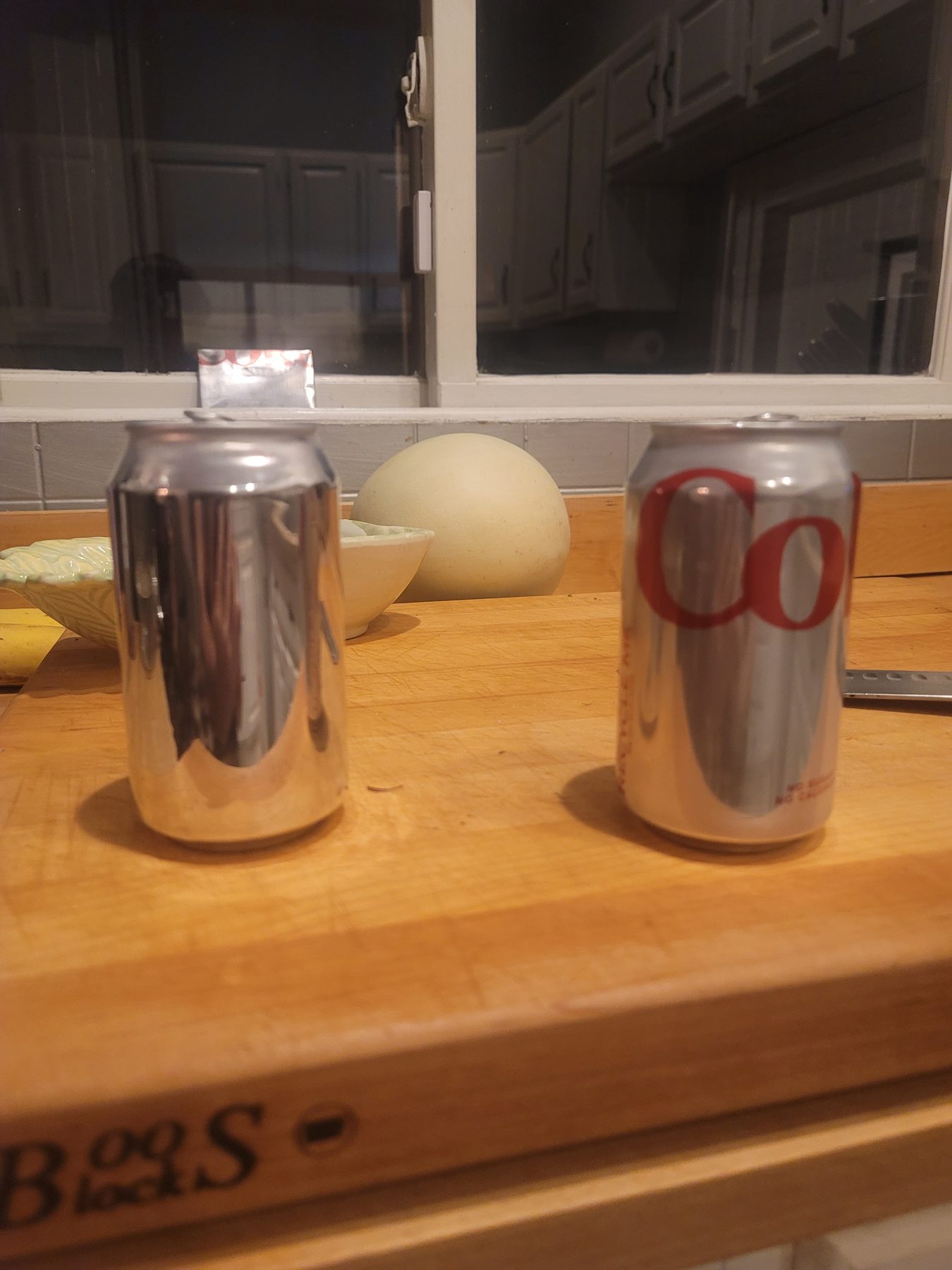
Reclaimed cans are cleaned and opened into usable sheets. The point is not to erase the source material. The printed color, scuffs, seams, and reflective aluminum all stay available as future marks.

  • Useful material is saved for color, shine, or structural behavior.
  • Can walls become thin stock; bottoms, rims, and tabs can become texture studies.
  • The first transformation is quiet: trash becomes an inventory of surfaces.
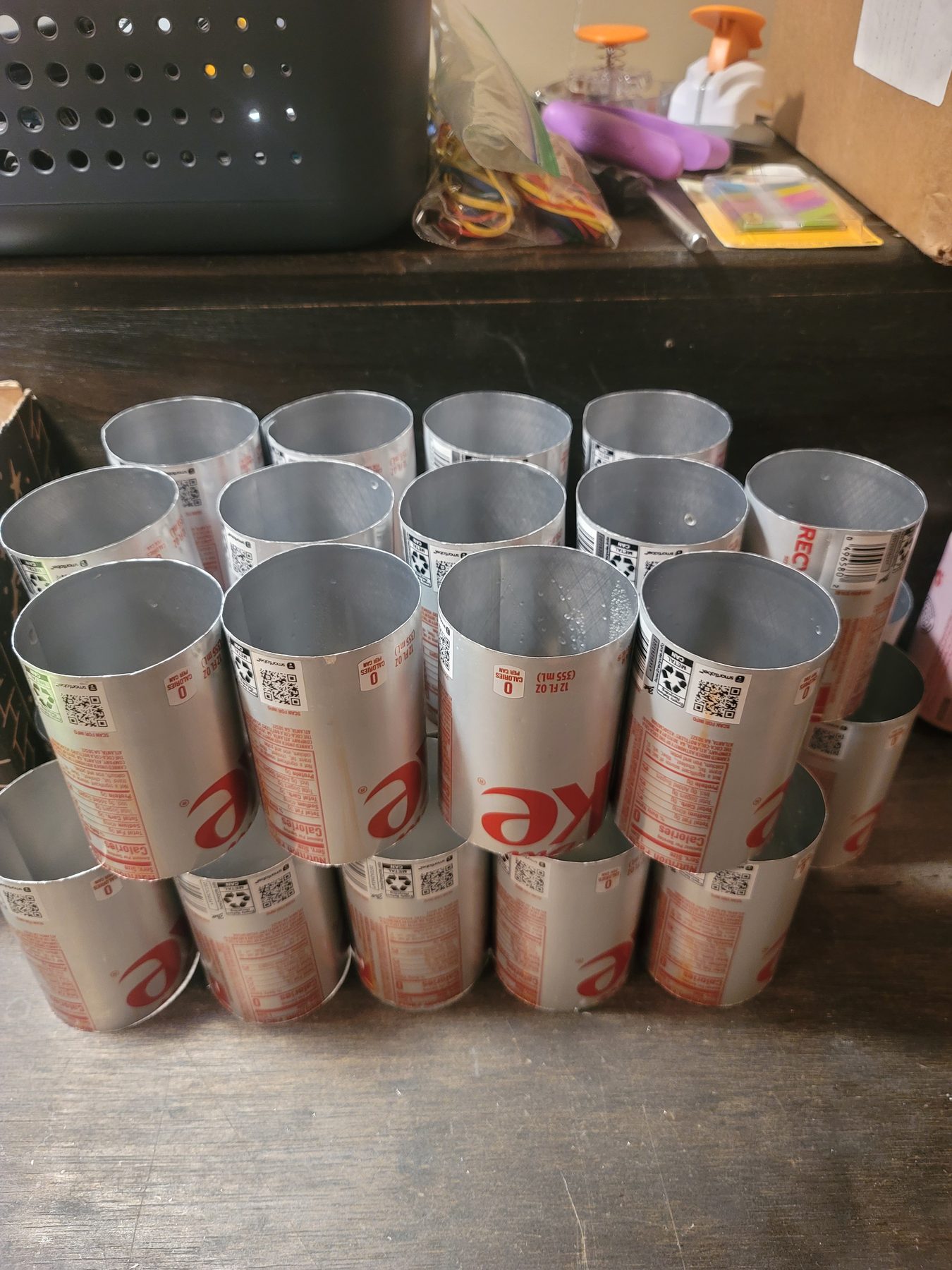
Clean reclaimed cans gathered as aluminum stock for mosaic work
Raw stockCans selected for color, metal, and surface behavior.
Opened aluminum can sheet standing beside another can
Opened sheetA curved container becomes a flat working surface.
Portrait loop Prepared aluminum sheet poster image for a platen flattening process loop
Platen loopVertical phone footage kept as an intentional process reel.

Portrait process loop included: assets/process/loop-platen-flattening.mp4
02

Template, cut, and make repeatable blanks.

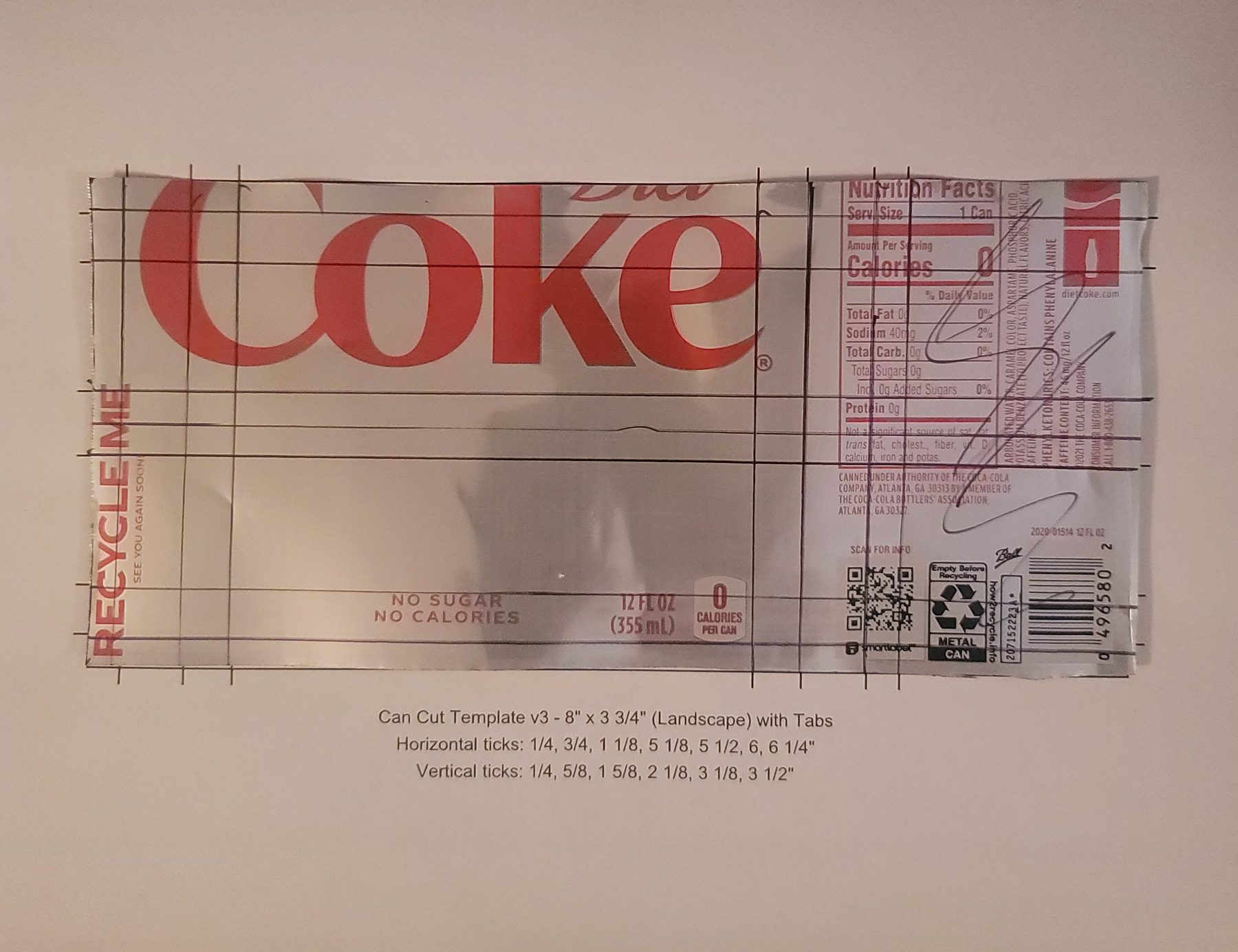
The pieces start to become systematic. Templates control the perimeter, fold lines, and cut marks so the handmade process can still repeat cleanly across hundreds of small tiles.

  • Templates turn loose metal into a controlled tile format.
  • Cutting is still hand work: each blank carries small evidence of the tool path.
  • The best blanks are not perfectly sterile; they hold light and minor irregularity.
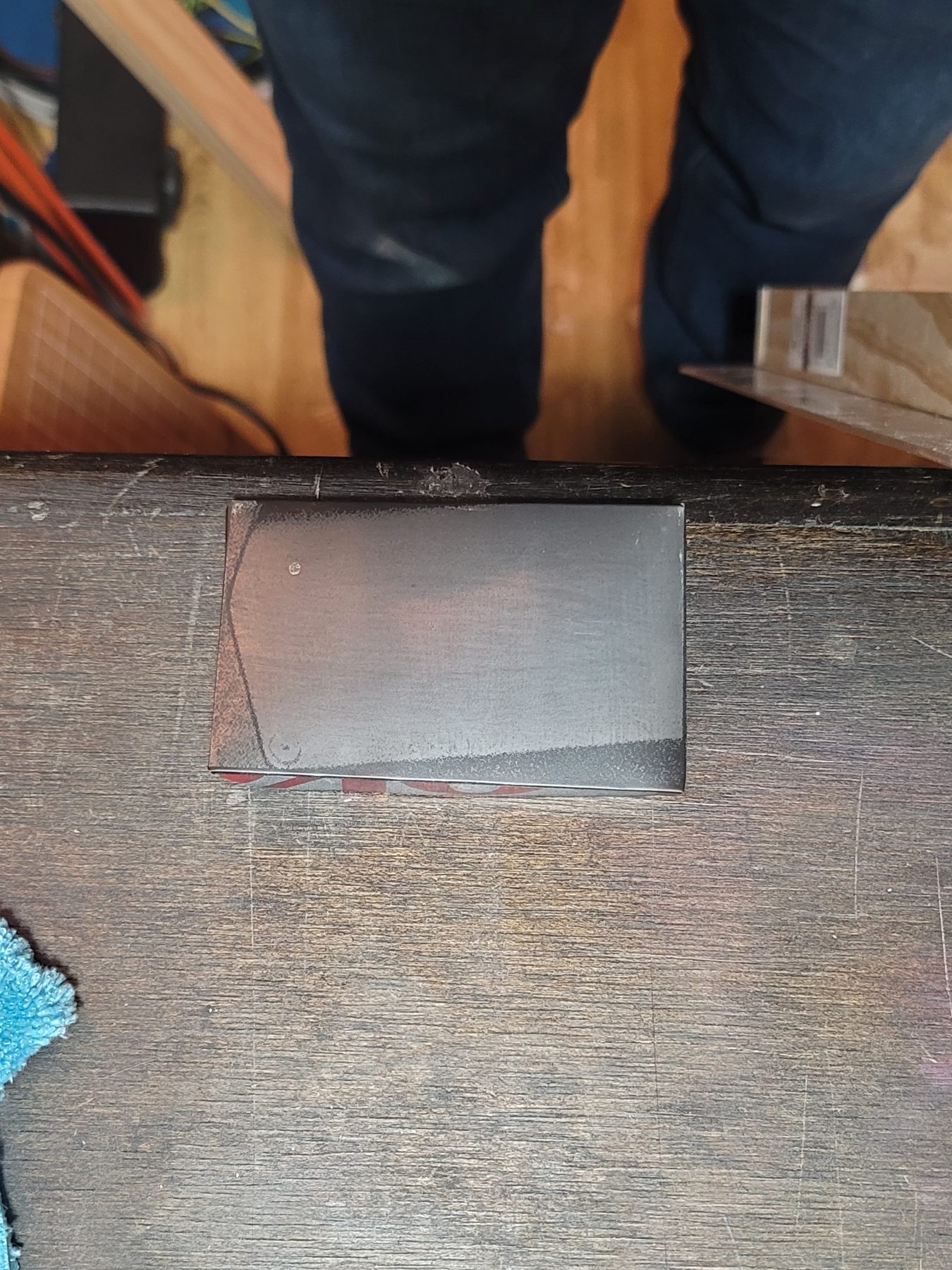
Cutting template placed over a Coke can aluminum sheet
Template guideCut marks, fold boundaries, and usable face area.
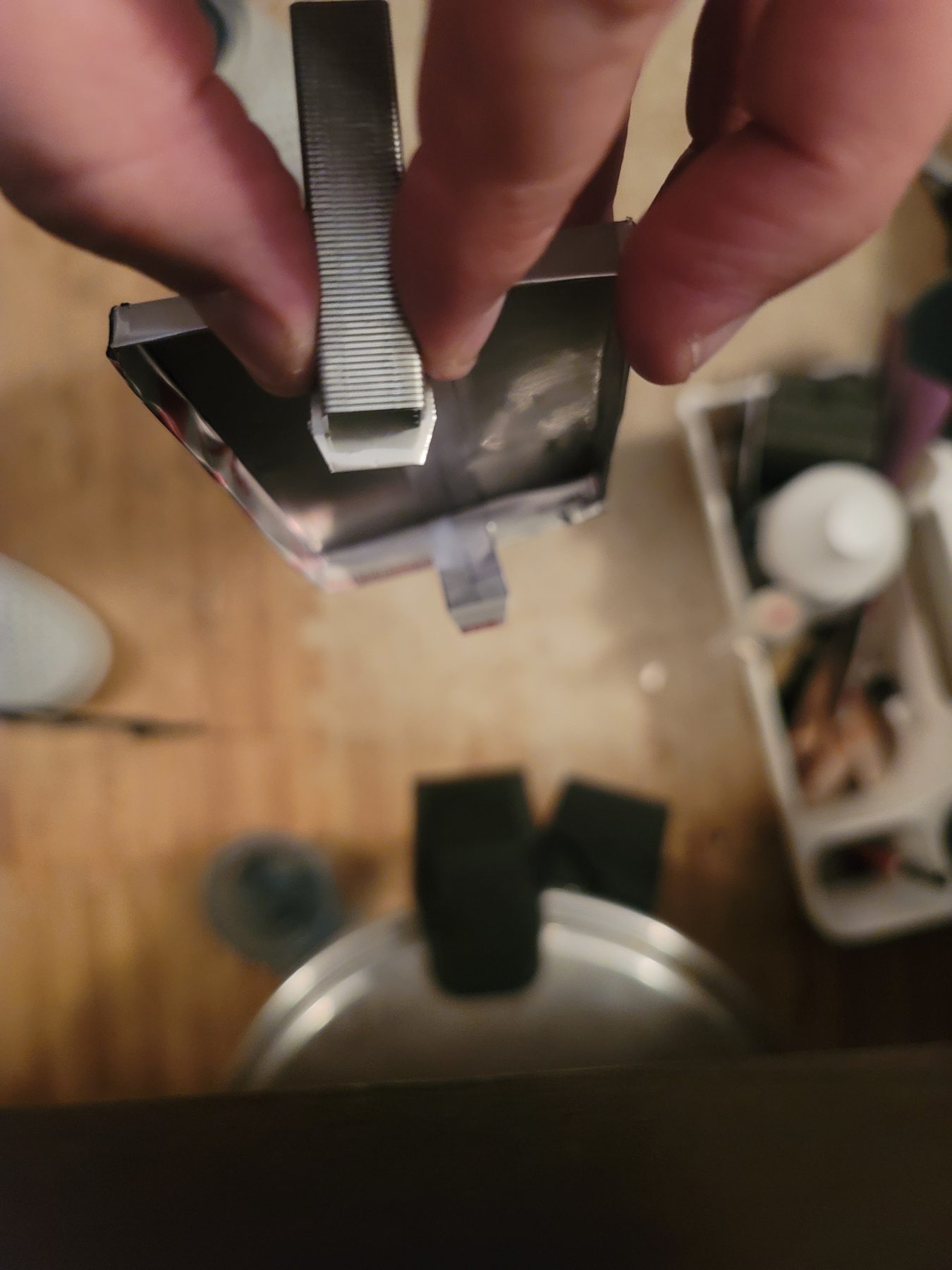
Hand cutting a small aluminum mosaic tile with a tool
Hand cutSmall, repeated cuts become the tile language.
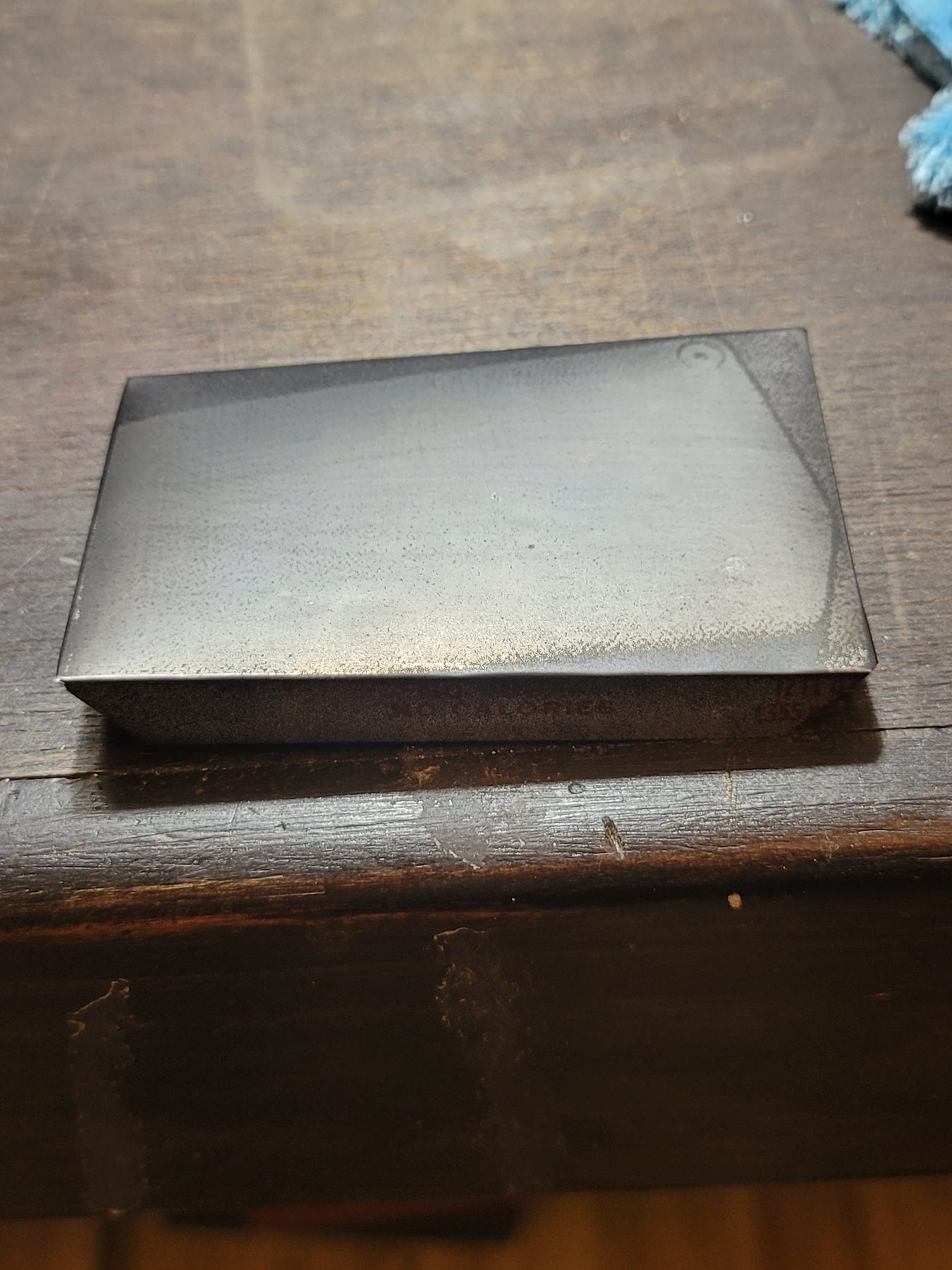
Finished small aluminum blank tile on a tabletop
Blank tileA prepared form ready for tone, bend, or placement.

This is the practical backbone of the page: it shows the visitor the work is handmade, but not random.

03

Work the surface.

Heat, smoke, abrasion, lacquer, and engraving add tone without hiding the aluminum. The goal is to make the surface behave: darker here, brighter there, alive when the viewer moves.

  • Some marks are controlled; some are discovered and saved.
  • Smoke and heat can create warm golds, dark chrome, and rainbow edges.
  • Engraving and abrasion add line work without making the tile feel painted flat.
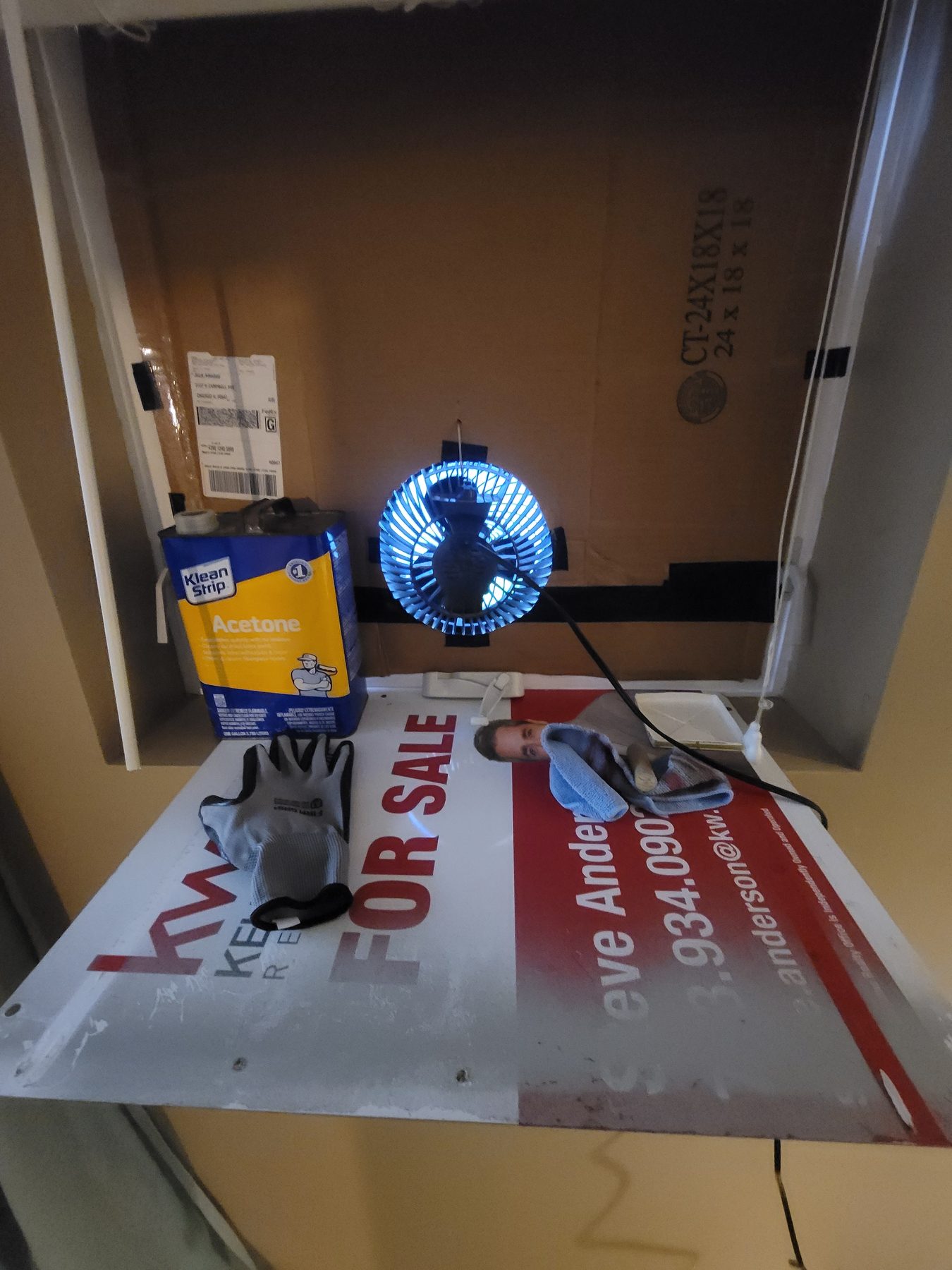
Portrait loop Laser engraver setup poster image for a short process loop
Laser loopShort vertical footage showing the tool path in motion.
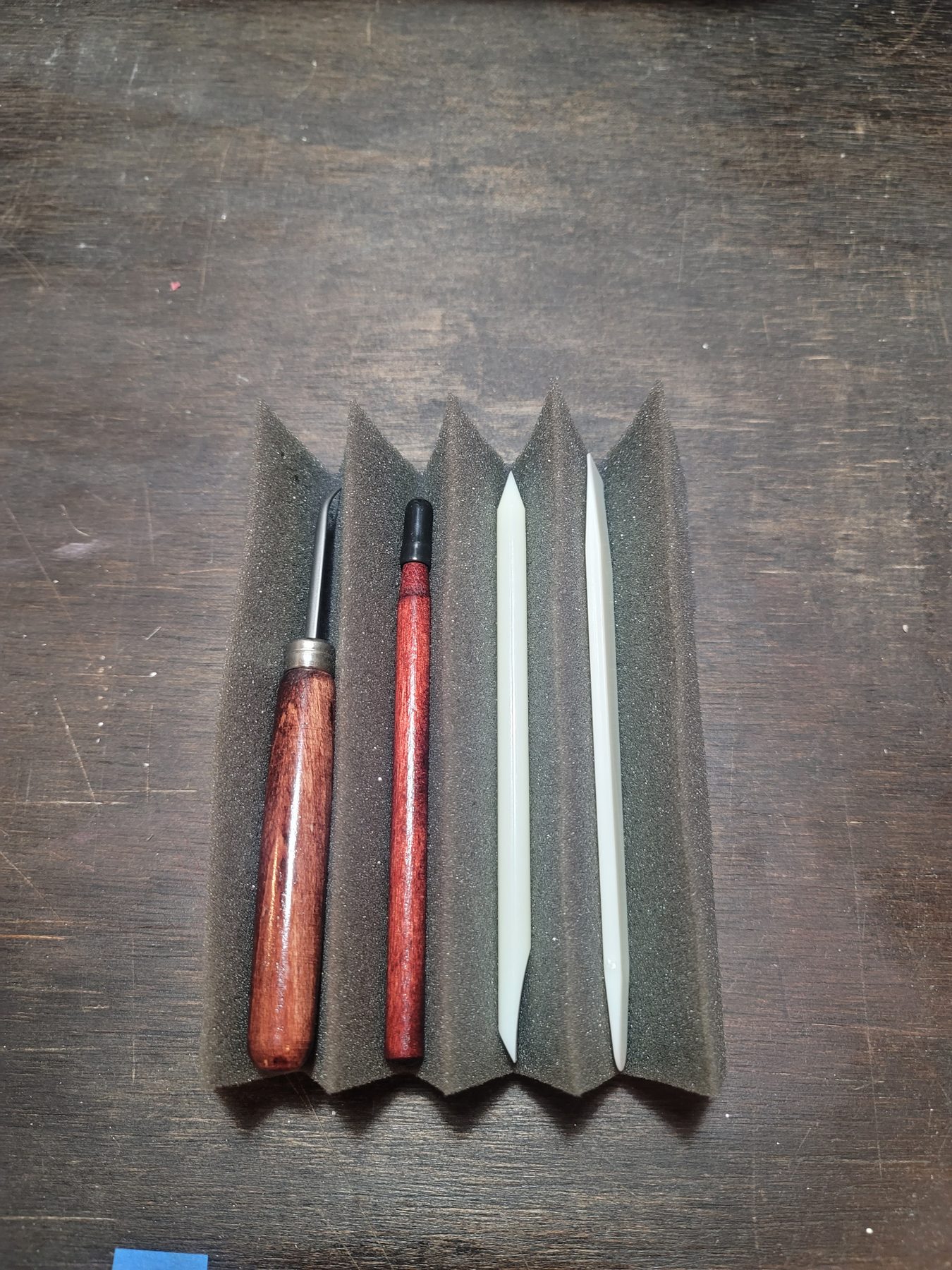
Hand tools used to shape and work aluminum mosaic surfaces
Surface toolsSmall tools for bending, scoring, and pressure marks.
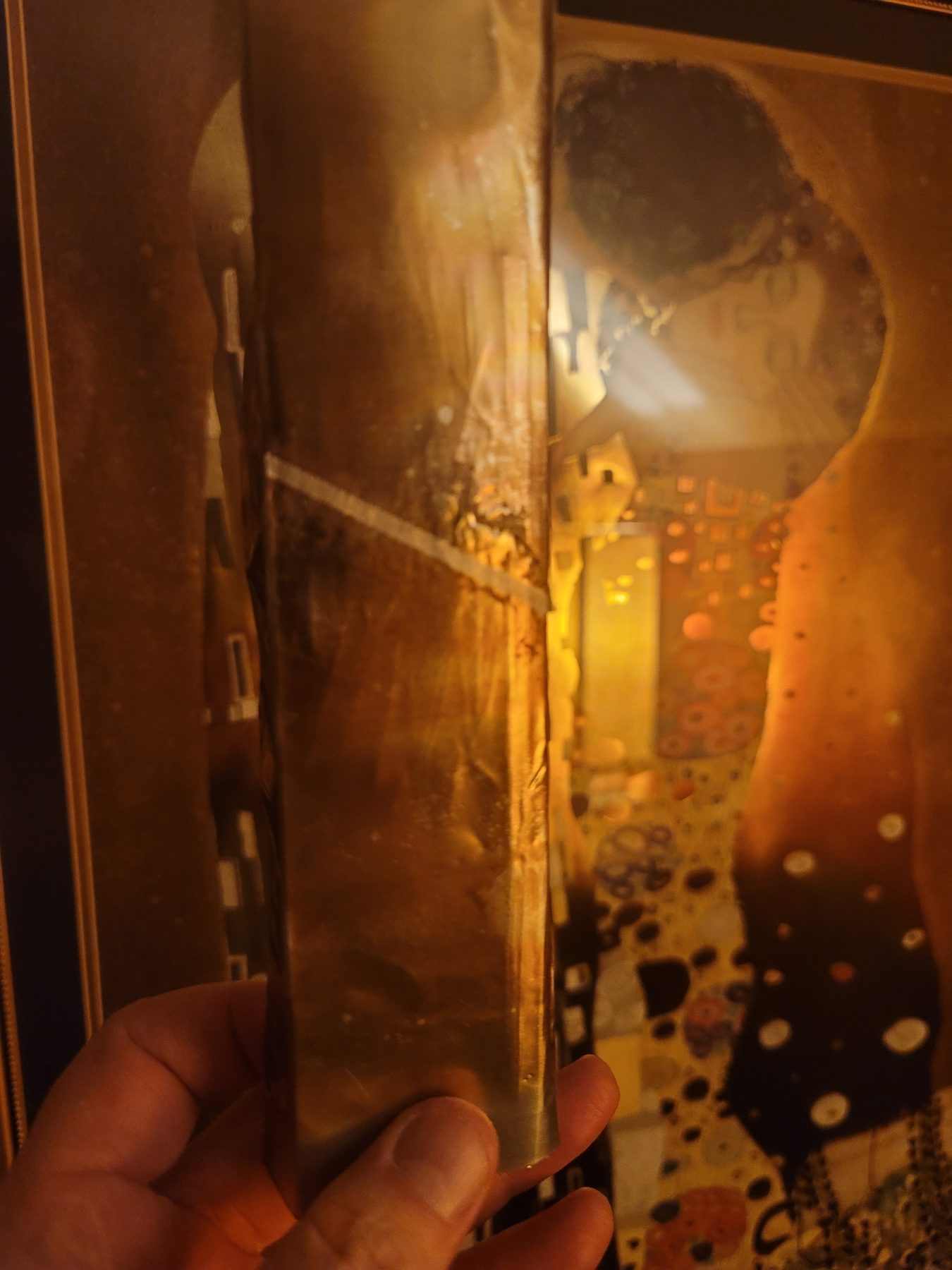
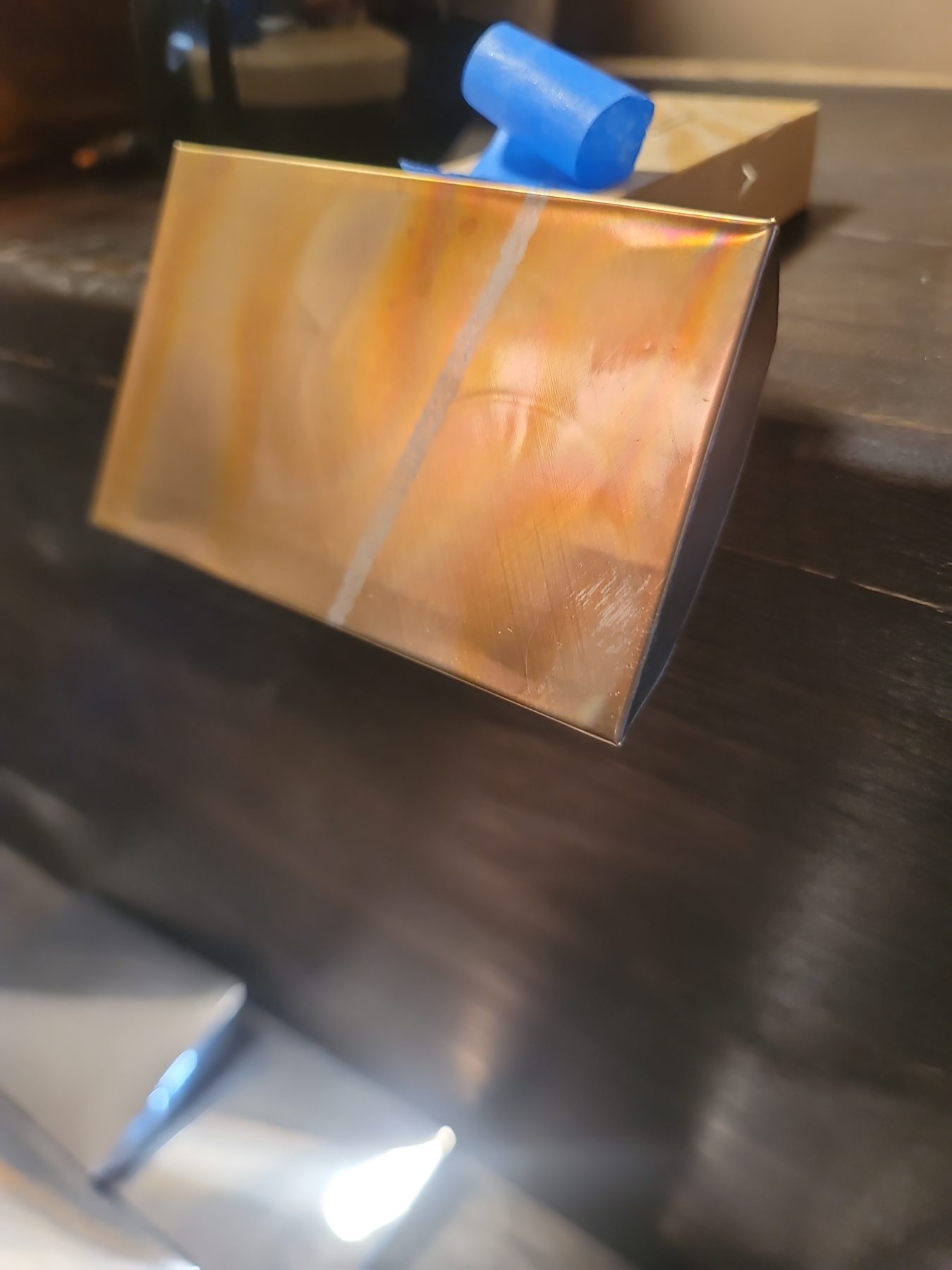
Smoke and heat toned aluminum detail with warm golden surface
Smoke / heatWarm tone and movement built directly into the metal.
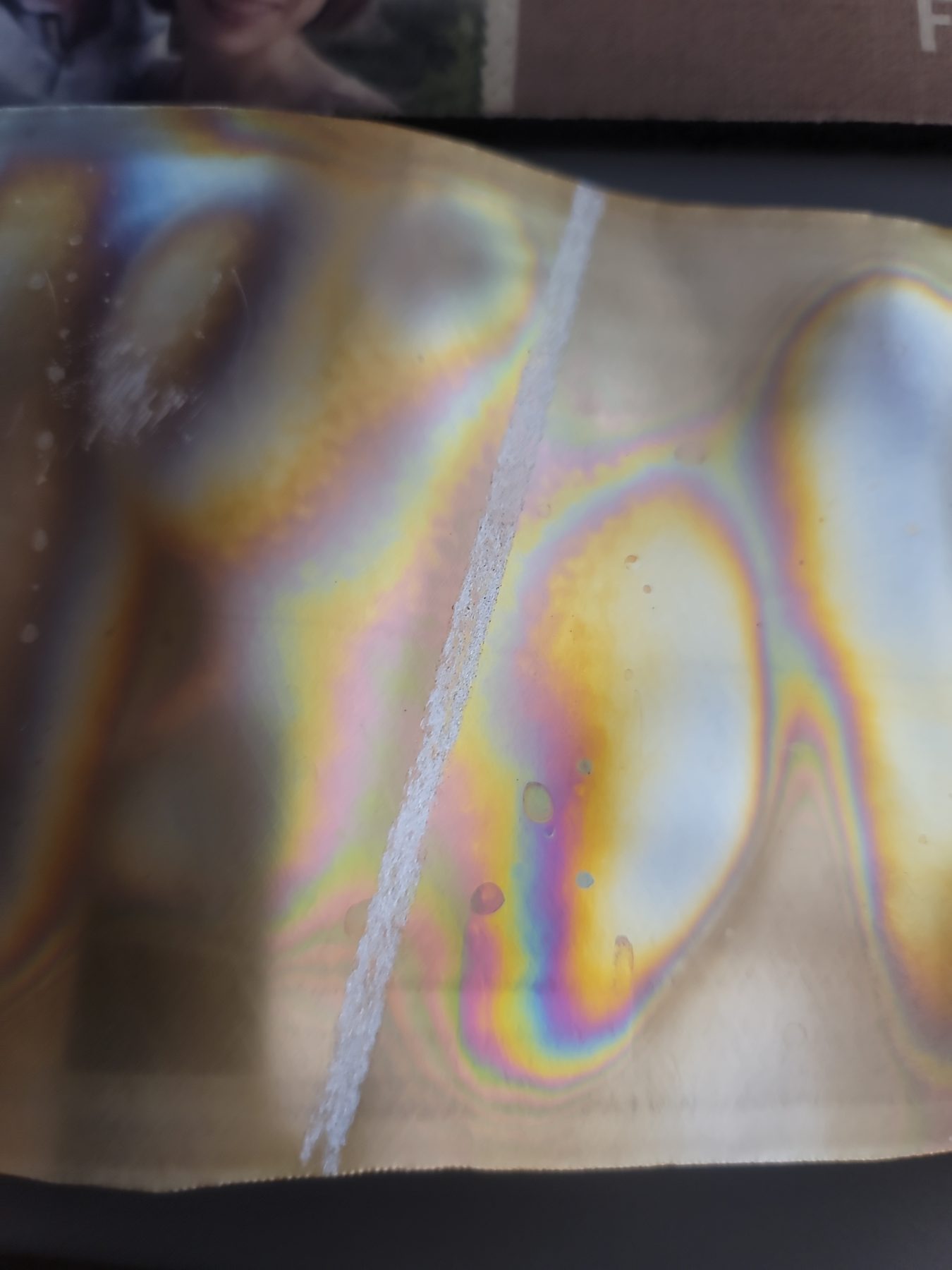
Rainbow highlight detail on a reflective aluminum mosaic surface
Highlight studyThe material changes when the light angle changes.

Portrait process loop included: assets/process/loop-laser-engraver.mp4

04

Sort, place, and let the image resolve.

The portrait emerges by accumulation. Tiles are sorted by tone, printed color, reflectivity, bend, and direction. A tile can be technically correct and still move if the face asks for a different kind of light.

  • The grid keeps the image disciplined while the surfaces stay alive.
  • Rows and clusters are checked close up, then stepped back from.
  • Resolution comes from the relationship between neighboring pieces.
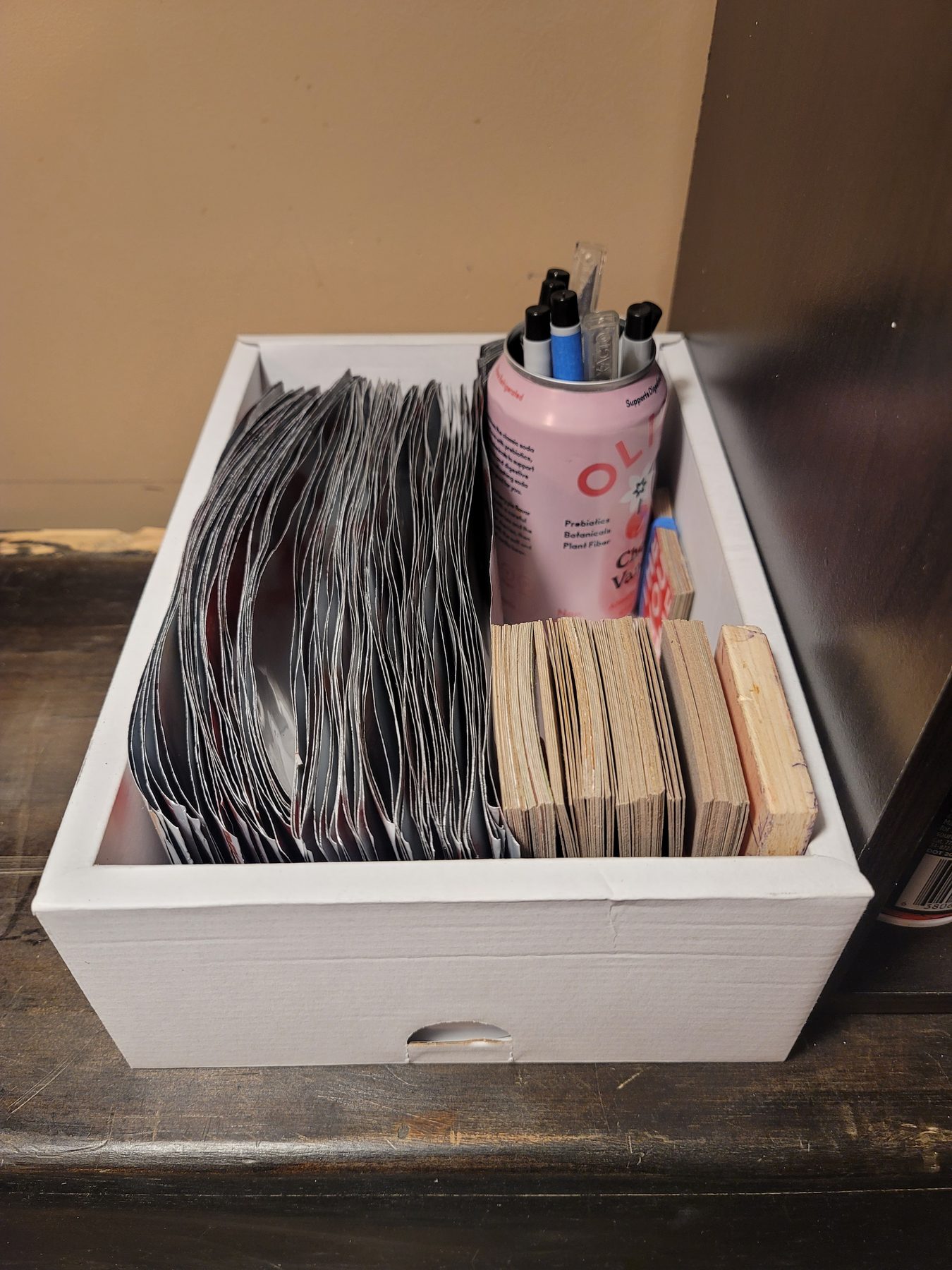
Box of prepared aluminum mosaic pieces sorted for assembly
Sorted stockPrepared pieces waiting for the right place.
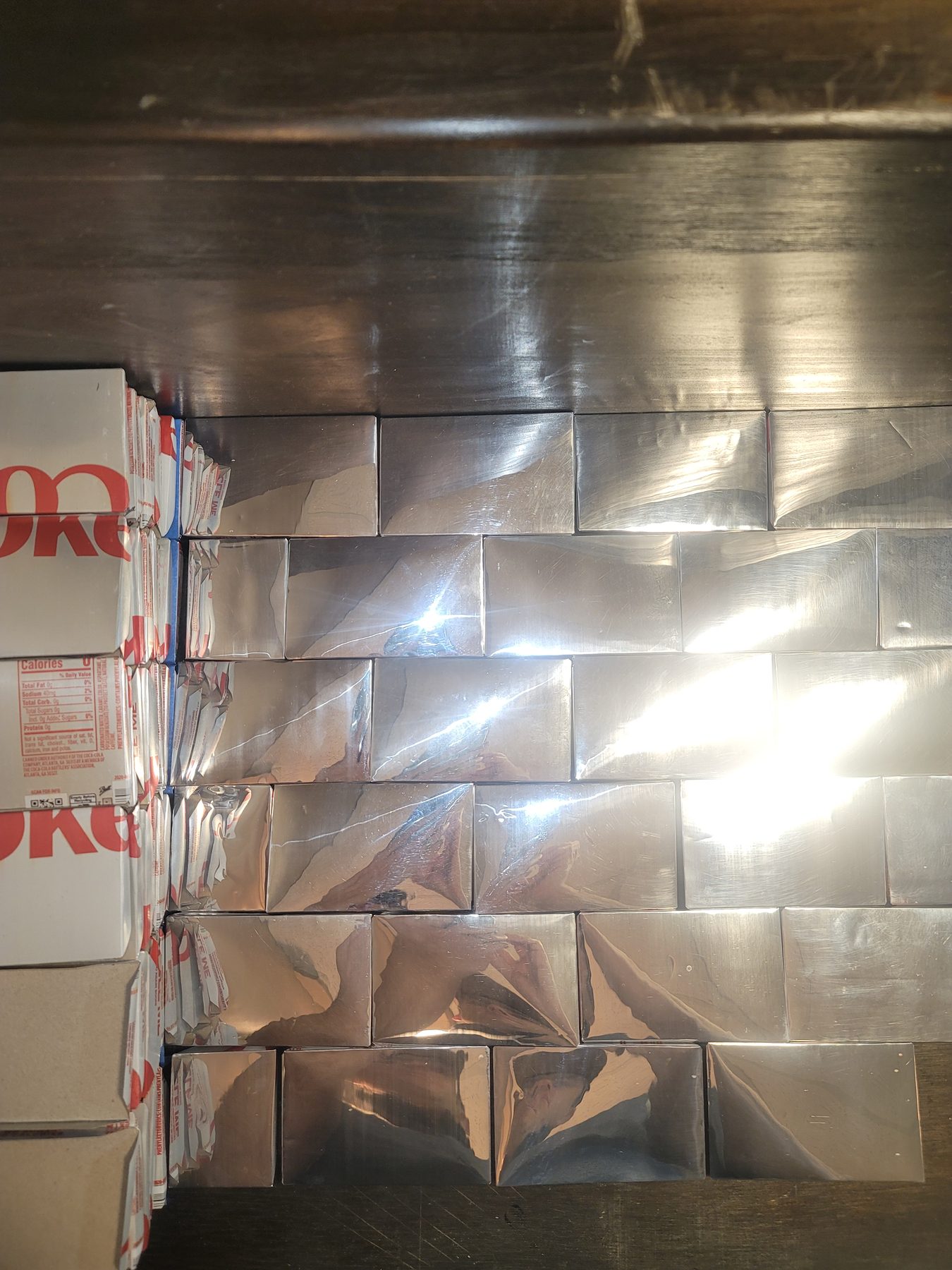
Reflective aluminum mosaic tiles laid out as a light field
Light fieldEach tile is part mark, part mirror.
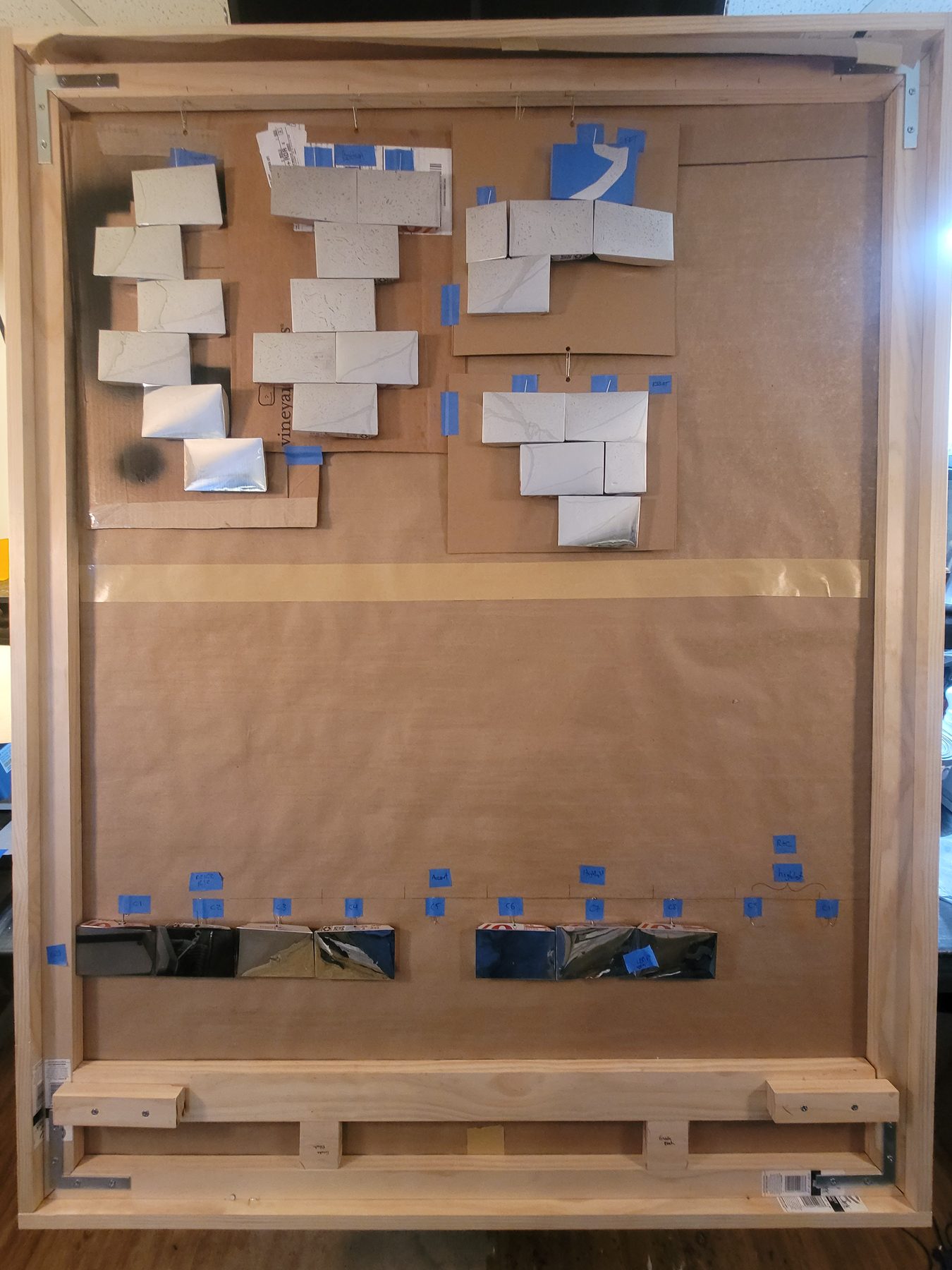
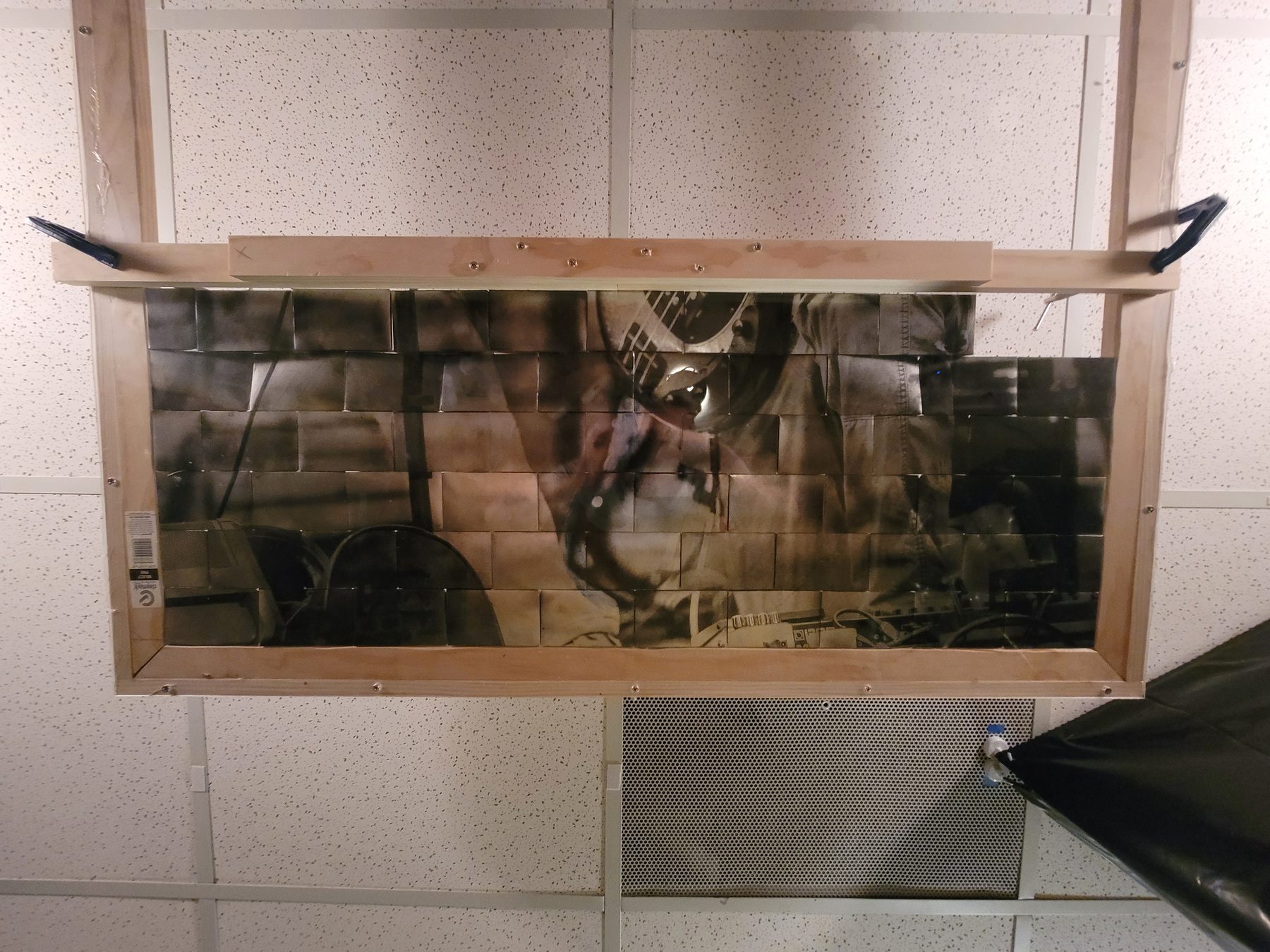
Mosaic assembly board with many aluminum tiles placed in progress
Assembly boardThe portrait is built as a field of small decisions.
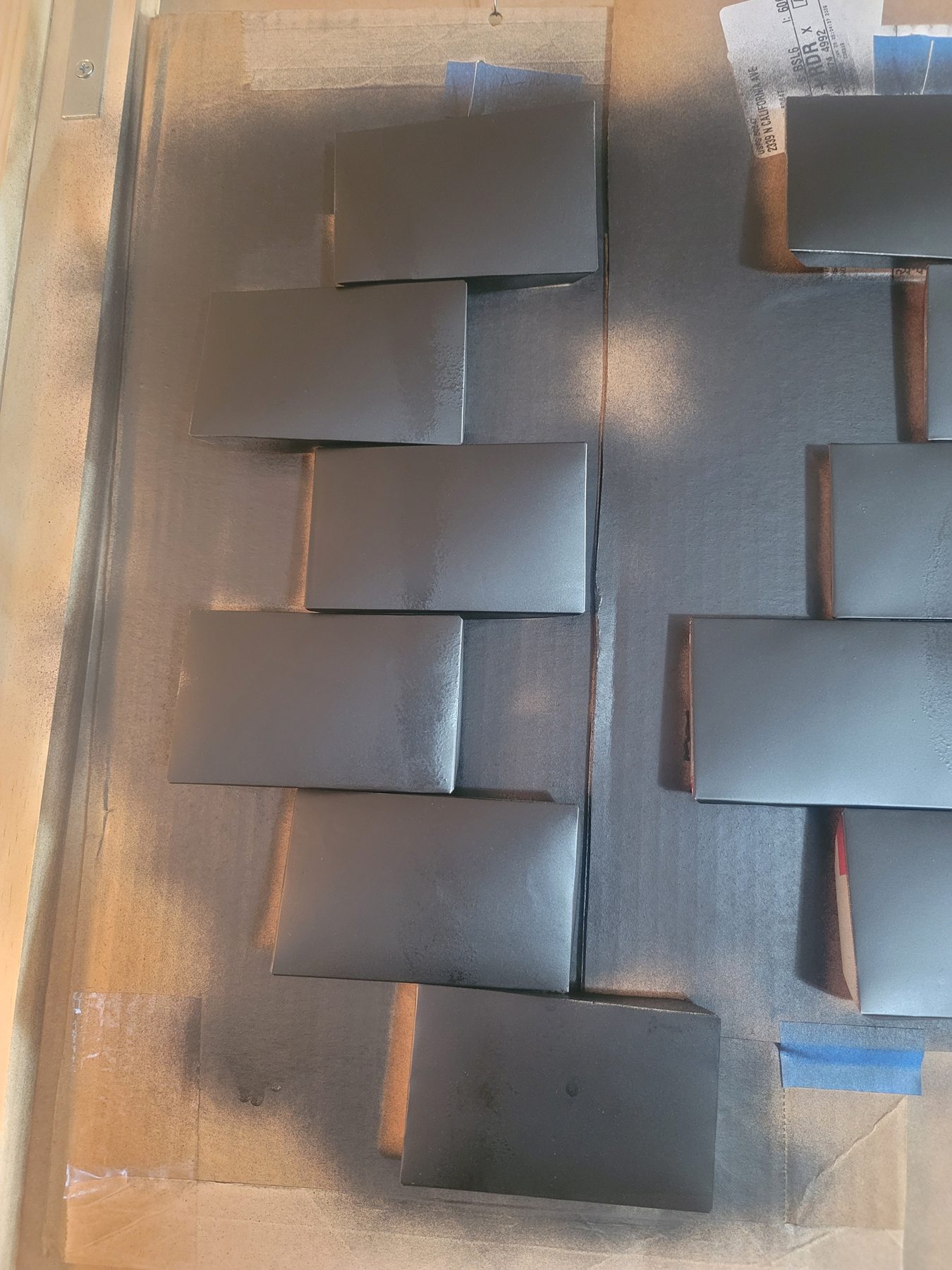
Formed aluminum tiles arranged on a board during portrait assembly
Formed tilesBends and overlaps start to carry the image.

This section is where the viewer starts to understand scale: hundreds of small surfaces acting as one image.

05

Frame, finish, and let the light move.

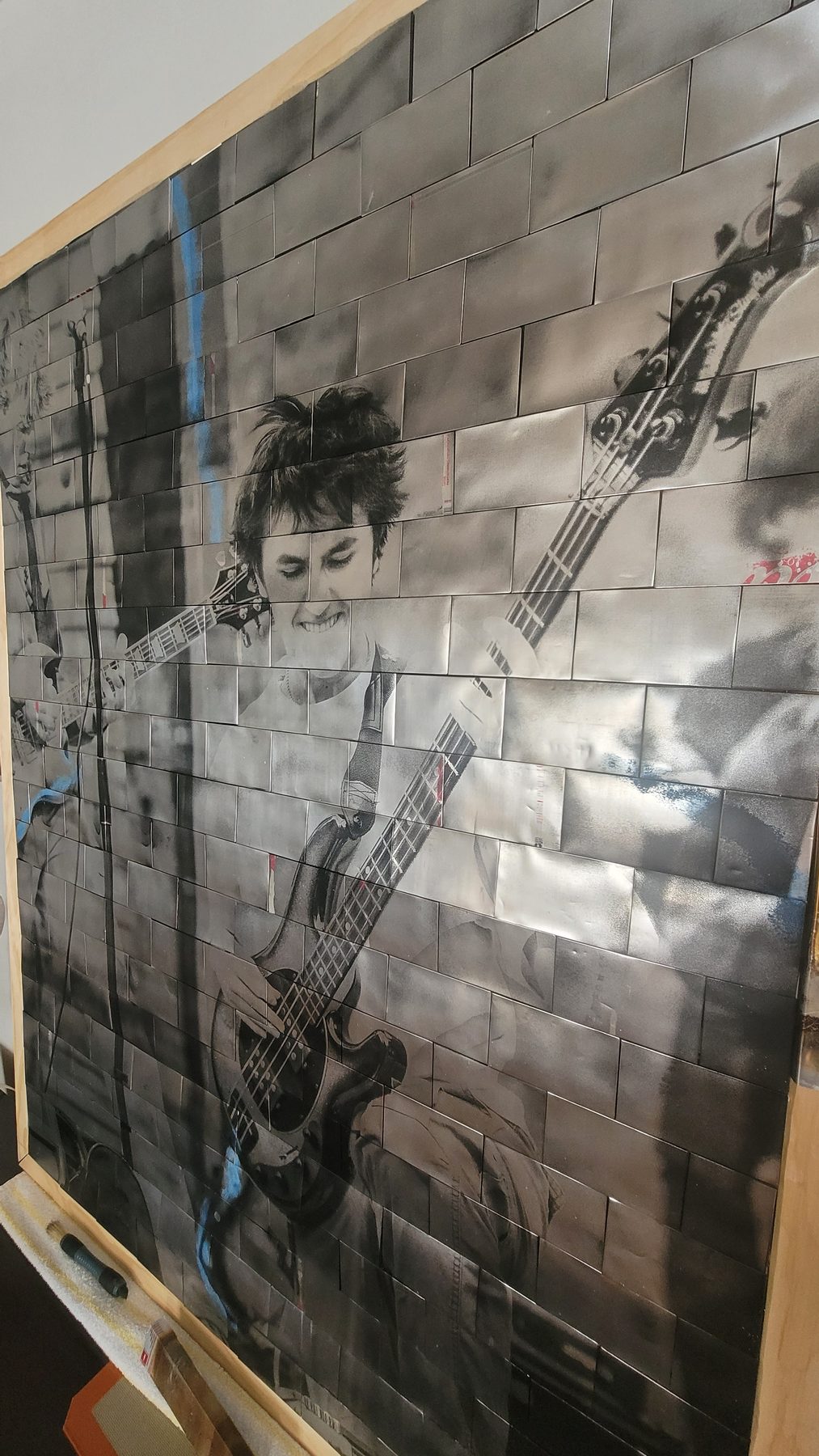
The final object is not a flat print. It changes with the room. Reflections, shadows, folds, and engraved details shift as the viewer moves past the piece.

  • Edges and framing are part of the object, not an afterthought.
  • Close range shows the cans; distance lets the portrait gather itself.
  • The finished work is built from reuse, but presented with care.
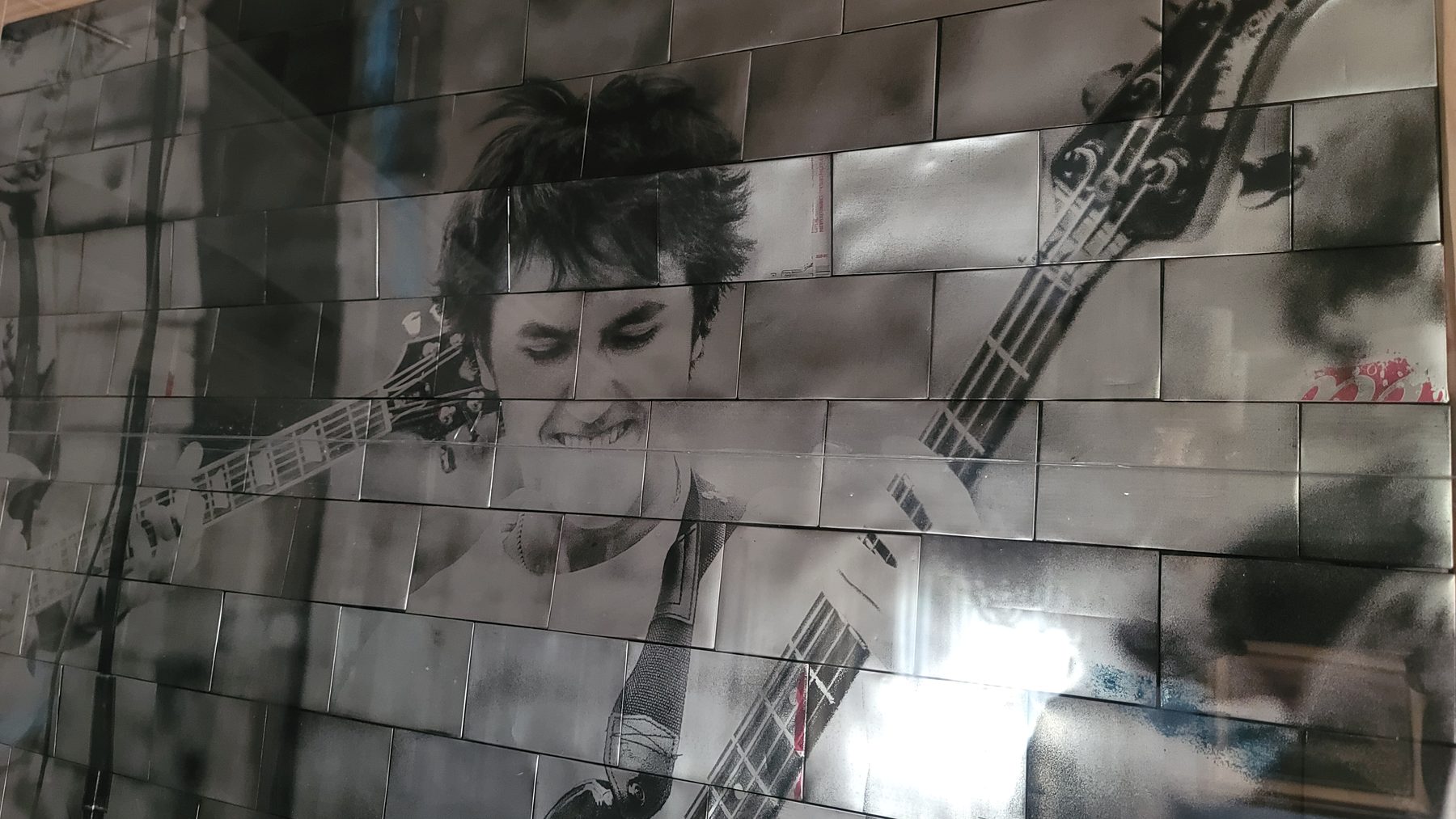
Close detail of a reclaimed aluminum mosaic portrait
Portrait detailThe image resolves through reflection, seam, and tone.
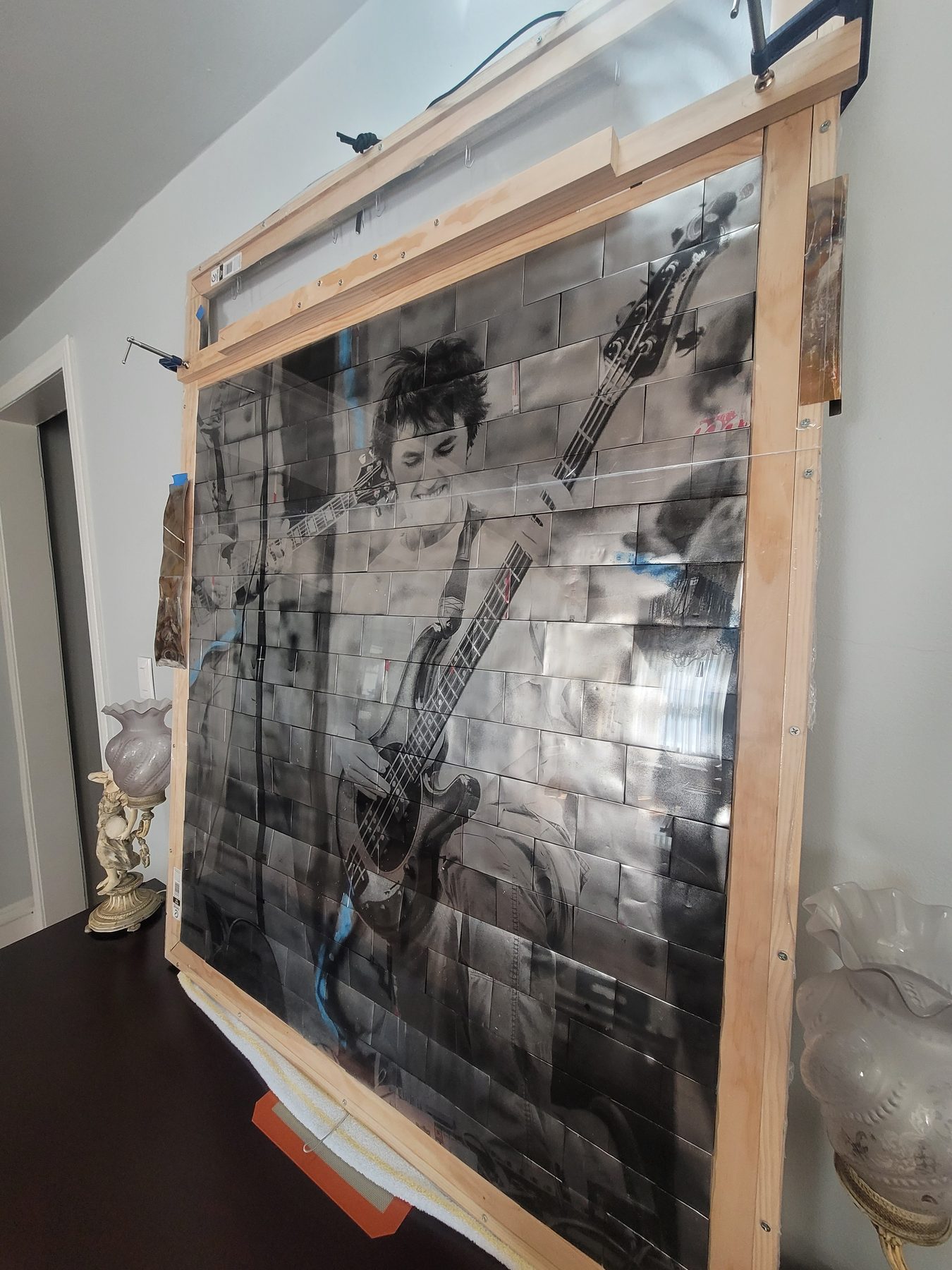
Side angle of framed aluminum mosaic showing depth and construction
Frame detailDepth, edge, and mounting become part of the object.
Framed reclaimed aluminum mosaic work on a wall
Framed workA handmade object, held cleanly.
Portrait loop Reflective aluminum highlight poster image for a shimmer pan loop
Shimmer loopA vertical pass across finished reflective highlights.
Finished reclaimed aluminum mosaic artwork displayed on a wall
Finished pieceWhat would have been discarded now holds the room.

Portrait process loop included: assets/process/loop-shimmer-pan.mp4

Built from what would have been thrown away.

For commissions, collaborations, or acquisition questions, send a note with the subject, desired scale, timing, and any reference material that should guide the piece.